



When it comes to automation and reliable control of a model railway, occupancy detectors are indispensable. The classic s88 bus has become established over many years as an inexpensive and widely used feedback bus in the hobby. But especially when building modern or larger layouts, you read more and more often about the standard s88-N. Where exactly is the difference – and why is s88-N worthwhile for your layout? We summarise the key points simply and clearly.
Key points at a glance
- s88 and s88-N work on the same principle – the modules report the occupancy states to the command station one after another.
- The difference lies in the cable: s88 mostly uses unshielded ribbon cables, s88-N standardised network cables with RJ-45 plugs.
- Network cables are much less susceptible to interference – no more “ghost trains”.
- s88-N also specifies fixed clock times so that modern microcontroller modules work reliably too.
Contents
The classic s88 bus: proven, but prone to interference
The principle of the classic s88 system has been proven thousands of times: the modules line up the occupancy states of the tracks one after another and report them to the command station.
A well-known weak point on larger layouts, however, is the cabling. Classic s88 modules generally use unshielded ribbon cables. Under the layout, where live wires, digital signals and point motors run in parallel, these cables often act like antennas: they pick up electrical interference. In the control system this shows up as flickering messages or so-called “ghost trains” – that is, false occupancy detections.
Typical symptom: A track section briefly reports “occupied” although there is no train there – often exactly when a point switches or a train starts moving.
The solution: the s88-N standard
To eliminate exactly these faults, the standard s88-N was created. The electronic principle and the communication of the modules remain the same – this ensures compatibility with existing digital systems.
The decisive difference lies in the cable connection: with s88-N the feedback data runs over commercially available, standardised network cables (CAT-5) with RJ-45 plugs.
s88 and s88-N compared
s88 (classic)
- mostly unshielded ribbon cables
- Pin header connectors without latch
- prone to interference on long cables
- Clock times not uniformly defined
s88-N
- Network cables with twisted wire pairs
- RJ-45 plugs that click audibly into place
- much less susceptible to interference
- fixed clock times in the standard
Your benefits with s88-N at a glance
Using network cables solves the most common problems in everyday model railway life and ensures smooth running:
- Better shielding against interference: In a network cable the wires are twisted in pairs (twisted pair); shielded cables additionally have foil and braiding. Interference from outside – for example from the digital signal on the track or switching operations – is effectively suppressed.
- Secure plug connection: RJ-45 plugs lock into the socket with an audible click. Cables slipping out or loose contacts caused by vibrations under the layout are a thing of the past.
- Easy to get: Suitable cables are available in many lengths – ready-made, with no crimping or soldering.
Practical tip: Use shielded 1:1 patch cables and, where possible, do not run the feedback wires directly parallel to track or point wires.
Important for modern technology: the standardised s88-N timing
Another, often overlooked advantage of the standard is the so-called timing. While old s88 modules still worked with simple hardware components, many modern command stations and feedback modules now use fast microcontrollers. When very fast components communicate with older modules, “communication problems” can occur because signals are sent too quickly.
The s88-N standard therefore specifies clear, fixed clock times. This gives modern, software-based components enough time to process the signals cleanly – data loss on the feedback bus is effectively prevented. Incidentally, compliance with this timing is also a prerequisite for using the official s88-N logo.
s88-N at JT Digital
For our s88-N feedback modules we consistently rely on RJ-45 network sockets and the timing specifications of the standard. This way all feedback signals reach your command station reliably and without interference. If your command station still has a classic s88 connection, our adapter connects both worlds.
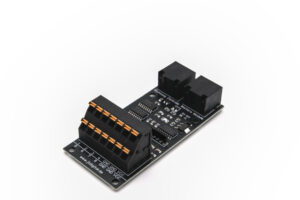
s88-N Feedback Module, 8-way
8 inputs with spring terminals, RJ-45 connection, expandable as required.
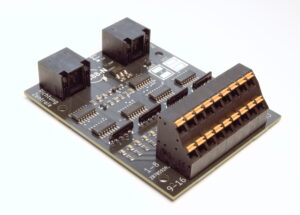
s88-N Feedback Module, 16-way
16 inputs with spring terminals, RJ-45 connection, expandable as required.
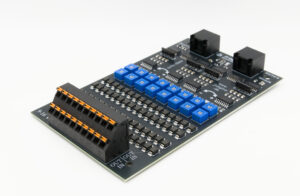
s88-N Occupancy Detector, 16-way
Current sensor and s88-N feedback module in one module: 16 sections directly to the command station.
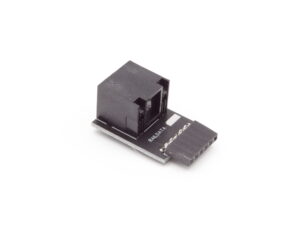
s88/s88-N Adapter
Connects s88-N feedback modules to command stations that still have an s88 ribbon connector.
Frequently asked questions
Can I operate s88-N feedback modules on a command station with a classic s88 connection?
Yes. Because the principle is the same, an adapter from the s88 ribbon connector to RJ-45 is enough – for example our s88/s88-N Adapter.
Which cable do I need for s88-N?
A commercially available network cable (patch cable) with RJ-45 plugs, wired 1:1 – not a crossover cable. Shielded cables are the better choice under the layout.
Is it worth switching if my s88 layout runs without problems?
If everything reports reliably, there is no need. But when expanding, with longer cables or with sporadic false messages, s88-N is the more robust solution.
More about the standard and source of the s88-N logo: s88-n.eu